
Please join us at one of our upcoming programs! They are scheduled on Wednesdays at Wehr Nature Center, 9701 W. College Avenue unless otherwise noted. Events usually begin at 7:00 pm, and the ending time of each event varies. If there are changes to dates or times of the events, they will be updated in the program headings below.
Please send an email to wimetrobird@gmail.com to receive the program link.
How Honey Bees work together with Dr. Chelsea M. Cook,
Behavioral Ecologist, Marquette University, Cook Lab
February 18, 2026 – 7:00 pm – Wehr Nature Center
Animals, including humans, use information from their world to make decisions. As a professor at Marquette, my research lab uses honey bees to understand what information is important, and how they communicate to work together. In this talk, I will share what we have learned about how bees work together, and what this can help us understand about our own complex society. I will also touch on the importance of science, the role public funding plays in science happening in Milwaukee, and of course, the importance of all pollinators.
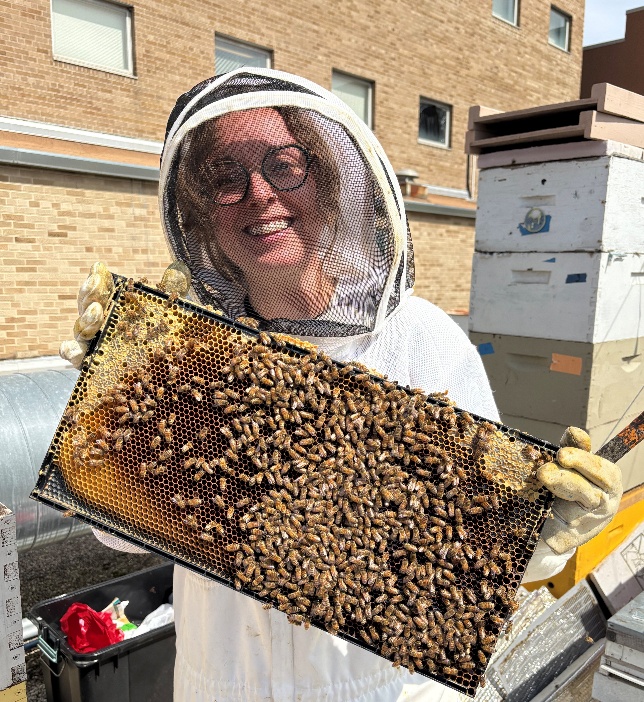
I am a behavioral ecologist and professor at Marquette University where I split my time between my research lab and the classroom. I teach courses on Animal Behavior, Neurobiology, and Environmental Biology. I am passionate about making science accessible to everyone, and I have collaborated with programs at Marquette to teach Beekeeping and Environmental Biology in prisons in Wisconsin, and we engage in outreach with Milwaukee Public Museum, local businesses, and schools. I earned my PhD in Ecology and Evolutionary Biology from University of Colorado Boulder, and did a postdoc funded by the NIH to explore how individual differences in learning change foraging behavior in honey bees. My research is currently funded by NSF and the USDA North Central Sustainable Agriculture Research and Education program. For more information, please visit my lab website at: https://thecooklab.org
Tiny Tigers: Introduction to the Fiercest Lepidopterans
with Dr. Nicolas J. Dowdy, Head of Zoology, Milwaukee Public Museum
March 18, 2026 – 7:00 pm – Wehr Nature Center
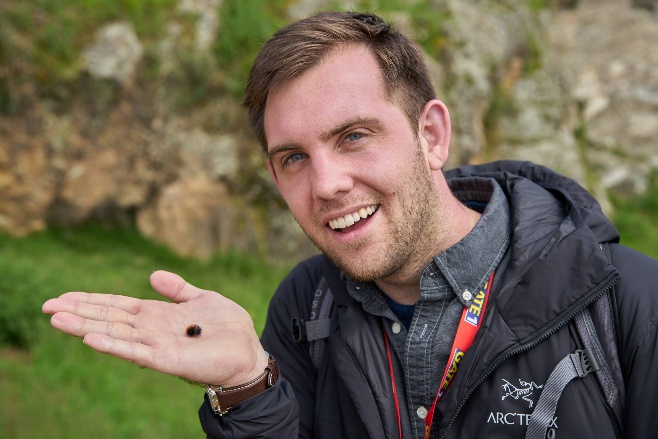
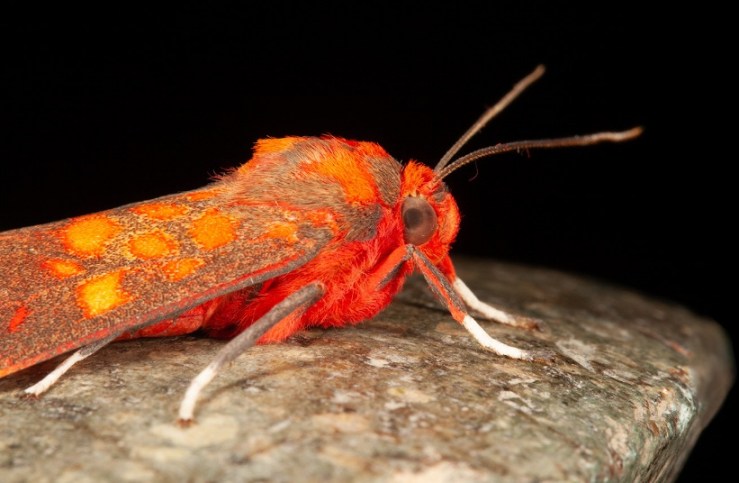
Tiger moths (family Erebidae, subfamily Arctiinae) are among the most colorful, diverse, and captivating insects. They also offer remarkable insights into how animals evolve diverse strategies for survival and communication. I will begin with an introduction to the major subgroups of tiger moths, their striking patterns and forms, and their global distribution.
A central theme will be the extraordinary ways tiger moths use chemicals obtained from their host plants. Many species hijack toxic chemicals from plants to defend themselves from predators such as birds and bats. These toxins make the moths distasteful, which they advertise with bright coloration and even sound. Some species have even taken sound production to such an extreme that they can disrupt, or “jam” bat sonar. These unique behaviors create a rich system for studying evolution, communication, and predator–prey interactions. I will review what scientific research over the past decade has revealed about how these moths use chemical and acoustic warfare to avoid predation.
I will also share ongoing tiger moth research at the Milwaukee Public Museum, including efforts to document global diversity and understand how complex traits evolve. Finally, I will highlight Wisconsin’s native tiger moth fauna and discuss where to find these species, how to observe them, how community scientists can contribute to research, and what can be done to support these amazing insects in our state.
SOS Save Our Songbirds: Three Actions To Help Songbirds at Home
April 15, 2026 – 7:00 pm – Wehr Nature Center
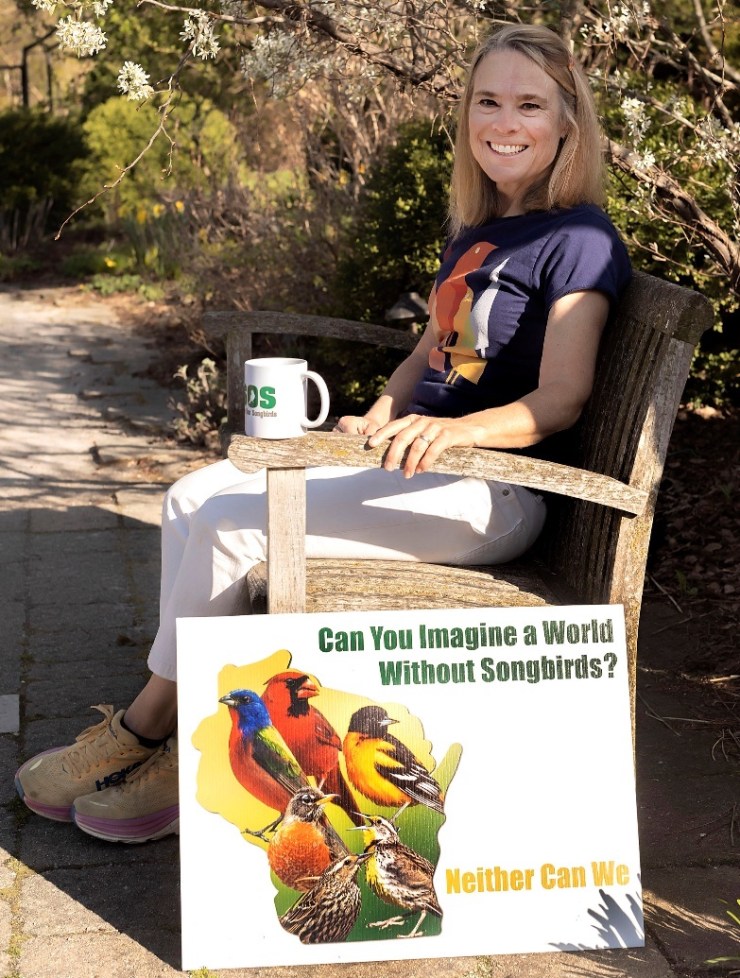
SOS Save Our Songbirds launched in March 2023 as an initiative of the Wisconsin Bird Conservation Partnership to help bring a bird conservation message to Wisconsin communities at the same time interest in bird watching was increasing.
This volunteer-based, donation based group has directly inspired over 22,500 people at 110 events to take action at home to save declining songbirds by sharing information and starter supplies.
SOS Save Our Songbirds is coordinated by Lisa Gaumnitz, who wrote about nature for the WI Department of Natural Resources for 25 years and helped reporters do the same. Her appreciation for birds and concern over their decline she spurred the creation of SOS Save Our Songbirds.
Through an engaging and interactive presentation set for April 15, 2026, at 7 p.m. at the Wehr Nature Center, Lisa will focus on three actions people can take at home to help songbirds: planting native plants good for birds; protecting birds from hitting home windows; and purchasing coffee and chocolate grown on farms meeting the highest standards for preserving our migratory birds’ winter habitats.
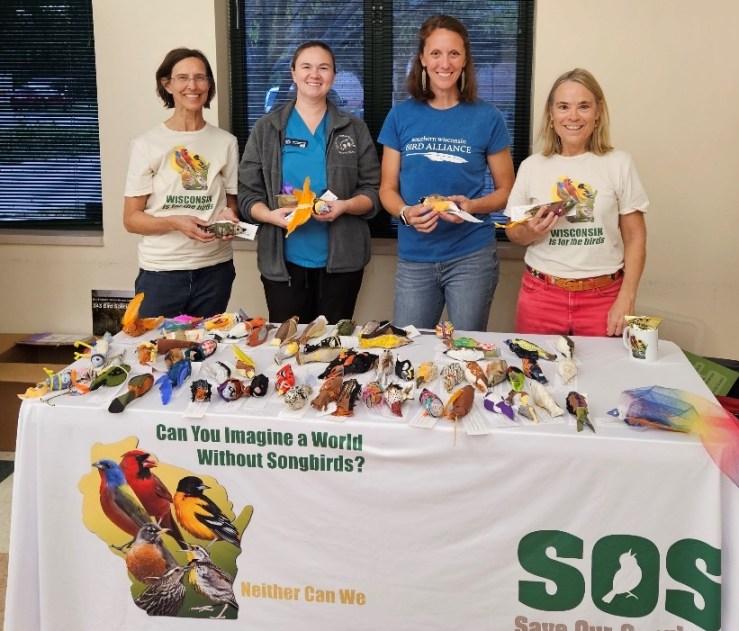
Lisa will discuss how SOS volunteers have reached new and more diverse audiences by offering a “Porch Prairie” container gardening workshop using native plants; Bird-friendly coffee and chocolate tasting parties, and a bird crafting event in which attendees decorated fabric birds to contribute to a national art project raising awareness about window collisions. Partnerships with other bird organizations, Wild Ones chapters, and other conservation groups and businesses have been key to experimenting with these innovative outreach events and spreading the word about home bird conservation. Attendees will receive supplies to jumpstart songbird conservation at home: a free native plant guide good for birds; samples of Smithsonian Bird Friendly certified coffee; and, for a $10 donation, a Feather Friendly window treatment kit to prevent birds from hitting a problem home window.
 WMAS
WMAS 